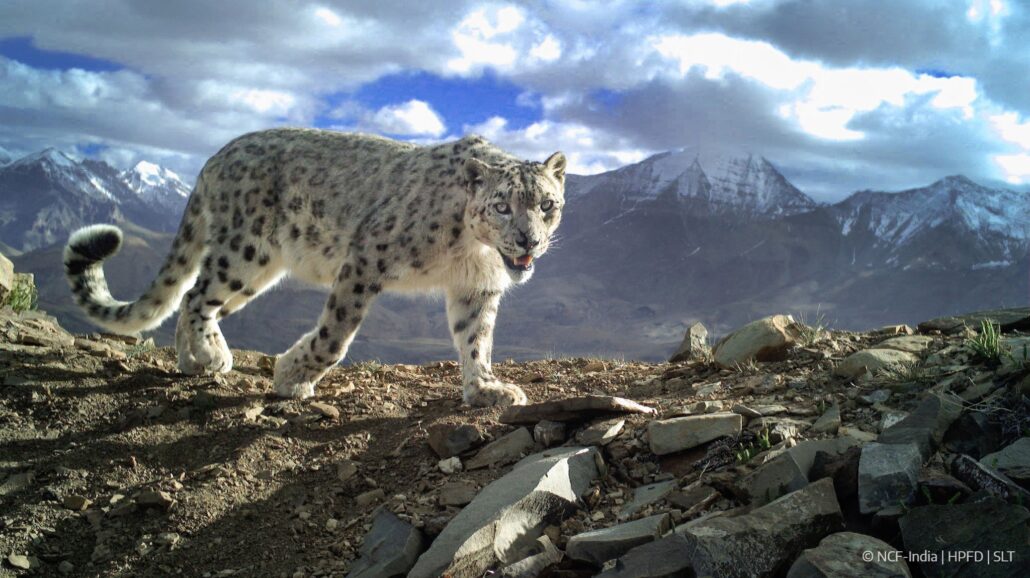
Snow leopards are making a comeback in China, according to a recent government report.
China’s federal National Forestry and Grassland Administration reports that populations of snow leopards surviving in the Himalayan region have approximately doubled in the past 13 years. The government administration says it’s a sign that conservation efforts are succeeding.
Whereas the government once believed that fewer than 2,500 snow leopards were living in the wild in China, today they estimate the population is closer to 5,000 after a new count.
Chinese authorities and state media announced the discovery in late October on the official International Snow Leopard Day.
The government credits the population bump to China’s expanding network of protected areas, especially in the west, and stricter conservation measures enforcement. China stewards about 60% of global snow leopard habitat. Snow leopards also survive in parts of Russia, Mongolia, and mountainous regions of northern India and Pakistan.
Total habitat available for snow leopards in China today amounts to about 2.08 million square kilometers, the government estimates, with the habitat spanning parts of Tibet, Xinjiang, Sichuan, Yunnan, Gansu, and Qinghai provinces.
Protected habitat includes two national parks and some 78 officially designated protected zones.
Snow leopard surveys are carried out using camera traps, as the animals are known to be very elusive. Some specimens are tracked using tracking collars and satellites. Scientists can also estimate population sizes and composition by using genetic data collected from their droppings.
Populations have been rebounding thanks to conservation efforts, but also due to translocations, moving snow leopards from places where they are relatively abundant to locations where their numbers are far lower.
In one such initiative, Chinese authorities say they relocated eight snow leopards to the Helan Mountains region, where the species had earlier been extirpated. The relocated animals are said to be doing well in their new home.
That translocated population is still being monitored. Authorities said a camera trap captured a female relocated in 2024 in the project with a cub, a very good sign of population recovery.
The International Union for Conservation of Nature (IUCN) classifies snow leopards as “vulnerable,” the least severe category within the “threatened” status on IUCN’s famous Red List.
Snow leopards still face threats from habitat loss and from hunters looking to sell their pelts and other parts to the global illegal wildlife black market. Pastoralists have also been known to illegally poach snow leopards in a bid to protect their herds.
Climate change is seen as another threat. The animals thrive in colder climates of alpine and subalpine zones. Warmer temperatures and shortening winters threaten snow leopards’ survival.
Conservation efforts will continue. Authorities say they are particularly keen on improving regional connectivity, or the extent to which protected areas connect, which is important for facilitating population gene flow and expansion.
Park Info
Park:
Himalayas
Location:
Tibet, China
More information: https://asianews.network/chinas-snow-leopard-population-doubles/?utm_source=chatgpt.com