A very tough future is in store for the world’s largest coral system as temperatures continue to rise.
That warning was issued this week by a team of scientists modeling the fate of the Great Barrier Reef Marine Park, Australia’s most famous UNESCO World Natural Heritage Site. Ocean heatwaves fueling coral bleaching events could see the Great Barrier Reef losing most of its coral cover in 75 years, University of Queensland researchers fear.
The culprit is global warming and humanity’s ongoing artificial emissions of heat-trapping gases accumulating in Earth’s atmosphere.
“We forecast a rapid coral decline before the middle of this century regardless of the emissions scenario,” said Yves-Marie Bozec, a U Queensland marine scientist and one of the lead researchers on the project.
Temperatures rising
The study involved running computer models to forecast developments at 3,800 separate reef structures constituting the Great Barrier Reef. The project was funded by a partnership with the Australian Government Reef Trust and the Great Barrier Reef Foundation.
The models factored in known impacts from global warming and projected emissions levels. The world is already on track to exceed the Paris Agreement emission cap goals that governments agreed to 10 years ago.
The team behind the study, published this week in the journal Nature Communications, swears that their work is solid and thorough. They’re calling it “the most sophisticated modeling to date.”
The rate and degree of future warming matter greatly. Faster warming to higher-than-expected temperature levels wreaks the most havoc on the reefs. Keeping anticipated additional warming to below the Paris Agreement target of 2 degrees Celsius affords the Great Barrier Reef some breathing room. “We saw that many reefs could persist under the Paris Agreement target of 2 degrees of warming,” said co-author Peter Mumby.
“However, higher emissions leading to faster temperature rises would drive most reefs to a near collapse,” Mumby added in a synopsis.
No consensus on resiliency
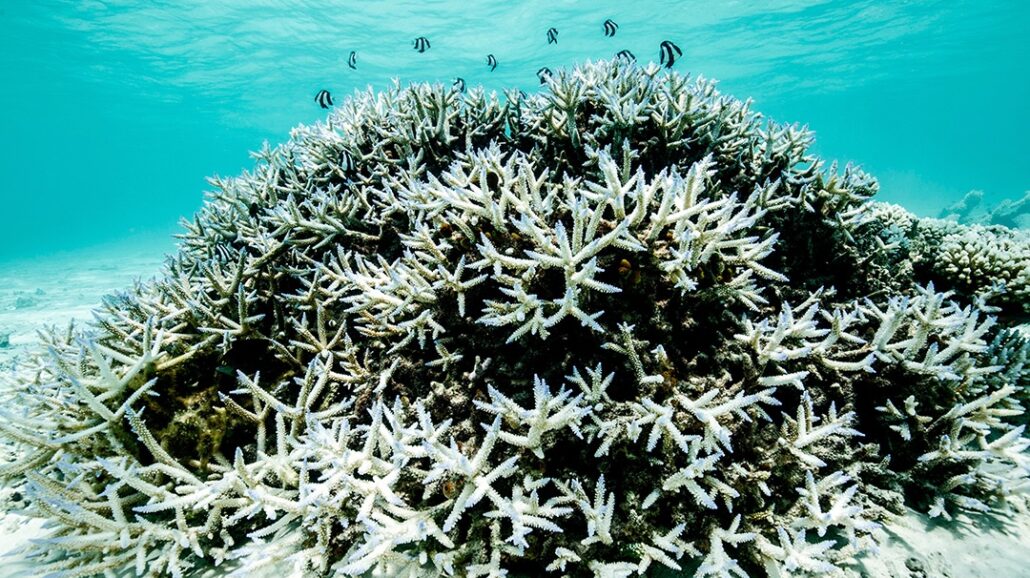
There is debate on just how resilient the GBR might prove to be in the face of global warming. Rising ocean water temperatures are causing more severe coral bleaching episodes. The Great Barrier Reef has suffered several mass coral bleaching events in recent years, including one last year.
Still, the extent of coral cover at the GBR has actually expanded in some areas, and science is uncovering evidence that some species of coral may be able to withstand warming conditions. “People with different agendas will tell you different stories about the state of the Great Barrier Reef,” Mike Emslie, Principal Research Scientist at the Australian Institute of Marine Science, told Public Parks earlier this year.
However, the scientists behind this newest research effort say they factored all of this in, balancing warming trends with what is known about some reef species’ ability to adapt to higher ocean temperatures.
The modeling system, dubbed ReefMod-GBR, ran simulations of life cycle changes for multiple species of coral known to inhabit the more than 3,800 structures used for the study. The modeling ran scenarios factoring in different potential warming trends, reef resilience, period cyclones, and even crown of thorns starfish infestations (a notorious enemy of corals).
Management rethink is in order
Reef systems enjoying good connectivity with each other fared better as they improved the corals’ ability to migrate out of stressed conditions. Coastal runoff exacerbates damage to reefs; complexes farther from the coastline are likely more resilient.
Either way, global warming poses huge challenges for the Great Barrier Reef. The new modeling may fuel some scientists’ calls for UNESCO to reclassify the GBR as a world heritage site that’s in danger. The Australian government has long been fighting a push at UNESCO to downgrade the Great Barrier Reef’s international stature.
Bozec said the data they gathered is clear: higher emissions levels and higher ocean temperatures spell doom for the majority of the Great Barrier Reef, regardless of the scenario. The researchers are calling for better management strategies to give the GBR its best chances of survival.
“We ran all of those factors with the most up-to-date climate projections, and the news was not good,” Bozec said.
Park Info
Park:
Great Barrier Reef Marine Park
Location:
Australia
More Information: