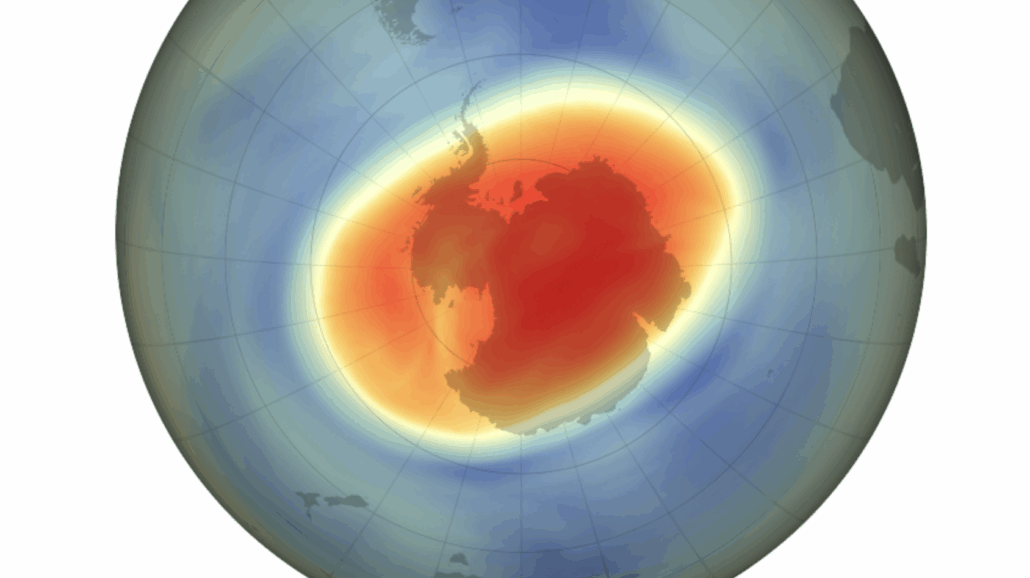
The infamous hole in the ozone layer is gradually healing up and closing and is on track to eventually be restored completely.
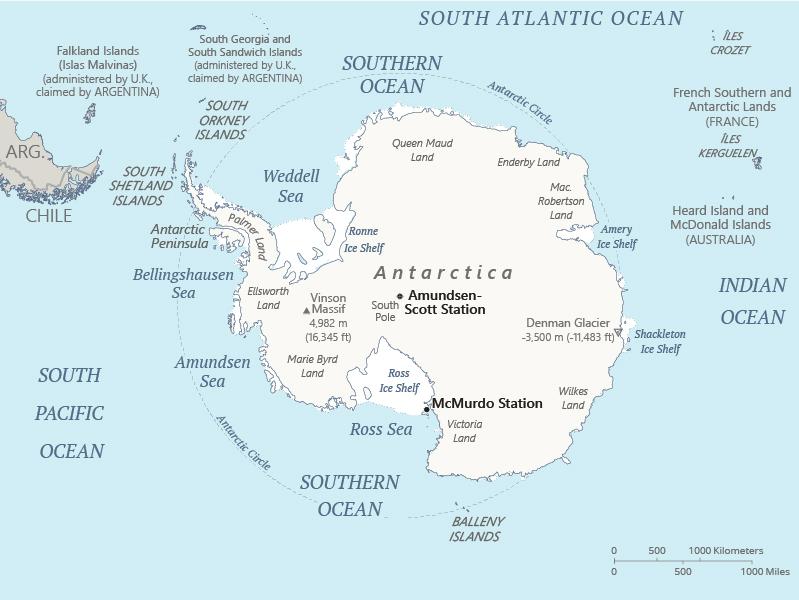
That’s the update the World Meteorological Organization (WMO) put out earlier this week. The news means a diminishing risk of skin cancer for visitors to the southernmost continent. Most of the ozone hole in the atmosphere is found above Antarctica.
WMO notified the world on the status of Antarctica’s ozone hole on the occasion of the 40thanniversary of the Vienna Convention, when governments came together to acknowledge that man-made refrigerant and propellant gases were leading to a chemical reaction that was gradually eating away at the ozone layer.
Later, governments concluded the Montreal Protocol which banned these gases in developed countries while securing funds for developing countries to phase out the use and manufacture of these artificial gases.
The Montreal Protocol is today considered one of the most successful international environmental treaties ever adopted.
“The Vienna Convention and its Montreal Protocol became a landmark of multilateral success,” United Nations Secretary-General Antonio Guterres said in celebration of the milestone. “Today, the ozone layer is healing. This achievement reminds us that when nations heed the warnings of science, progress is possible.”
The ozone layer is a region of the upper atmosphere rich in ozone gas. At lower elevations ozone can be toxic and harmful to life. But in the upper atmosphere it protects Earth from harmful radiation emanating from the sun.
The UN estimates that the manufacture and use of ozone-depleting gases have plummeted by 99% thanks to the Montreal Protocol. With the ozone layer gradually returning to its historic extent, both humans and wildlife in Antarctica and in other southern locations are better protected from the sun’s rays. The ozone hole is known to occasionally migrate over parts of Australia and New Zealand.
Substances known to destroy ozone in the upper atmosphere used to be commonly found “in refrigeration, air conditioning, firefighting foam and even hairspray,” WMO noted.
“The ozone layer is now on track to recover to 1980s levels by the middle of this century, significantly reducing risks of skin cancer, cataracts, and ecosystem damage due to excessive UV exposure,” the global weather authority said.
However, it’s still too soon to declare total victory, said WMO Scientific Advisory Group chair Matt Tully.
“Despite the great success of the Montreal Protocol in the intervening decades, this work is not yet finished, and there remains an essential need for the world to continue careful systematic monitoring of both stratospheric ozone and of ozone-depleting substances and their replacements.”
Park Info
Location:
Antarctica
More Information: