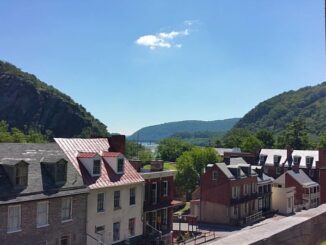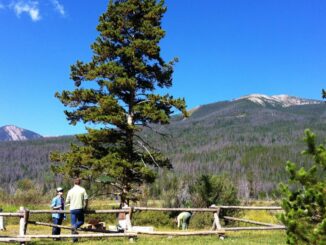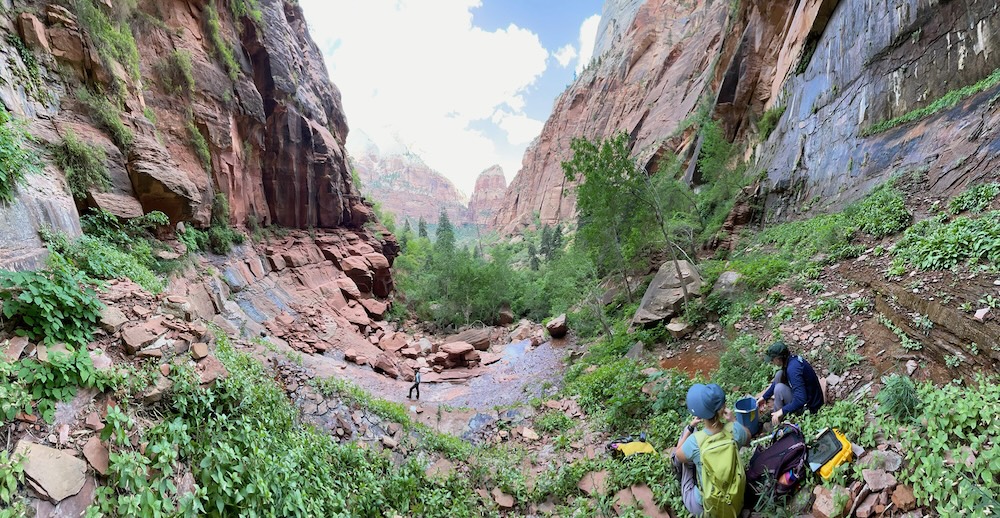
Colorado State University is working with the National Park Service to assess and protect national park water supplies to meet future needs.
–Guest Article–
As record numbers of visitors flock to national parks, the U.S. National Park Service is evaluating the sustainability of park water supplies. Colorado State University is partnering with the agency to assess and protect national park water supplies to meet future needs.
“Parks may shut down for the public if the water supply is not there,” said Caitlin Mothes, a project co-leader and lead geospatial data scientist with CSU’s Geospatial Centroid. “We’re providing the science and the data that will help them understand how likely that is to happen and how they can plan for the future.”
The National Park System’s more than 430 parks across all 50 states and U.S. territories depend on clean, reliable sources of water to support visitors, staff, firefighting, irrigation and concessions, in addition to wildlife and ecosystems.
More than 330 million people visited national parks in 2024, setting a new record. Increased visitation combined with threats from drought, wildfires, aging infrastructure and a changing climate underscore the importance of the project.

Drought and increased demand for water already have impacted national park operations. In August, water shortages forced Glacier National Park to close bathrooms at one of the most visited areas in the park. Drought and a leaky water line also caused Big Bend National Park in Texas to shut off flush toilets in March.
CSU co-leads Mothes, Katie Willi and Kristen Cognac are conducting a first-of-its-kind vulnerability assessment of national park water supplies for human use. The evaluation and tools created through the project will help secure water resources by guiding resource management decisions and infrastructure investments.
As part of the “Water for People” project, the Department of the Interior’s Office of the Solicitor also will examine water rights and policy constraints to ensure parks have sufficient access to water for operations. In a related project, the NPS is working with the Desert Research Institute to evaluate water availability and quality for ecosystems.
Pooling data
CSU and NPS researchers are compiling existing water supply data for NPS parks in the continental U.S. into a national water supply database – the first comprehensive collection of such data. They will determine how sensitive each water supply is to changes in climate by comparing hydrologic measurements, such as streamflow and groundwater levels, to historical climate and water balance data.
The nationwide analysis will estimate how each supply may be affected by a range of future climate conditions and visitation projections. It will rank the most vulnerable water supplies – the ones most susceptible to change and most likely to fall short of demand – and recommend adaptation strategies. Adaptation strategies could include conserving more water, fixing leaky infrastructure, increasing storage to withstand longer or more intense droughts and switching to less vulnerable sources.
Databases and web tools developed by CSU will provide park managers with specific measures, such as fire risk and projected decrease in runoff, as well as the overall vulnerability score for strategic investment of resources.
Tyler Gilkerson, a project co-lead and NPS hydrogeologist, said the tools created for Water for People and the information they provide will keep the water running for national park visitors.

In addition to their natural and cultural value, national parks are economic drivers, said CSU co-lead Cognac, a research scientist in the ROSS lab, led by CSU Associate Professor Matt Ross, who is the project’s principal investigator.
“The economic benefits of keeping parks going extend well beyond the parks into surrounding communities,” Cognac said. “It impacts a lot of Americans and tourists from abroad.”
Many parks have more than one water supply, ranging from lakes, reservoirs, aquifers, springs and streams to collected rainwater and desalinated saltwater. The project has identified critical water data gaps.
“Across the board, we’ve recommended improved monitoring because the data gaps are pretty large,” Cognac said.
Deeper dives

The CSU team is compiling more extensive reports on supply and demand at high-priority parks identified by NPS as having significant water supply improvement needs or suspected vulnerabilities. These detailed assessments include site-specific data that isn’t available from national databases. The team visits the site to collect water samples, gather paper records to digitize and gain insights from park scientists.
“We cater these deep-dive reports to what they need and what they have,” said Willi, a CSU co-lead and data scientist in the ROSS lab.
So far, they have studied Bryce Canyon National Park, Cedar Breaks National Monument, Valles Caldera National Preserve and Zion National Park. Combined, these parks serve more than 8 million visitors a year, Gilkerson said, and they are at risk from longer and more severe droughts.
Willi said their recommendations, which are developed in collaboration with the NPS, have included increasing storage capacity and conservation measures, from fixing leaky systems to switching from flush toilets to vault toilets.
“Water investments are some of the biggest-dollar investments that parks make,” Willi said, “so it’s important to do them wisely, and this project helps with that.”
–Reprinted with permission by Colorado State University and Jayme DeLoss. You can read the original article here.