Over and over again, state governments have proven themselves incompetent or incapable public lands managers, often choosing instead to sell the public’s natural heritage to the highest bidders.
–Guest Commentary–
The crisis facing our public lands
The second Trump Administration poses something of an existential threat to our federal public lands and the agencies that manage them.
Federal public land agencies have been hit hard with massive DOGE cuts to their budgets, mass staff layoffs, and bogus “emergencies” used as excuses to offer exemptions from most environmental rules, laying the groundwork for wildly ramped-up extraction of timber, energy, and minerals.
As if these weren’t bad enough, there is another insidious threat looming in the background—the movement to transfer large chunks of federal land to state control.
Like a peat fire, this movement has been simmering underground for more than a century, periodically flaring up into full-blown conflagrations (1890s, late 1940s, 1980s, and now). This latest iteration began in 2012 when Utah passed a state law demanding control over many of the federal lands within its borders and allocating state money to pay for the fight. Most recently, this effort took the form of an expedited motion placed before the US Supreme Court claiming that “unallocated” (meaning Bureau of Land Management) land rightfully belonged to Utah and requesting its transfer. This January, the Court declined to hear this very legally dubious case (at least for now).
Idaho, meanwhile, passed similar legislation, while Montana, Alaska, and Wyoming have also actively considered making public land transfer demands. The Wyoming House passed transfer legislation, but it stalled in the state Senate. A decade ago, transfer legislation was passed by both houses of the Arizona Legislature but was later vetoed by the governor.
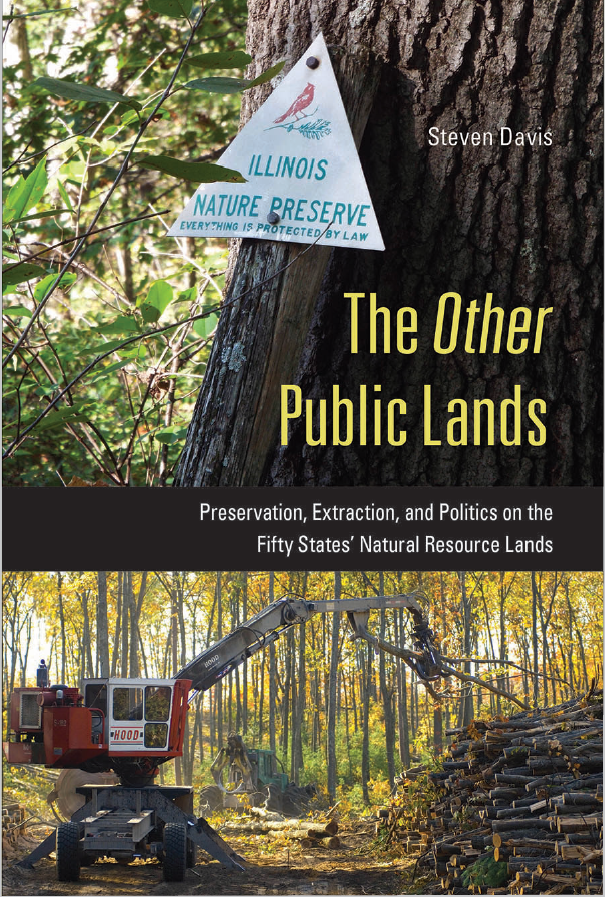
I happen to study state public lands and have recently published what might be the first comprehensive 50-state overview of state public land holdings and how they are managed (The Other Public Lands, Temple University Press, 2025). If this research has told me anything, it’s that there is no possible way the states could effectively and responsibly steward federal lands should these lands be actually transferred to them in the future.
States often starve public land budgets
With just a few exceptions, the story of state public land management is one of severe austerity.
State parks, for example, consume a grand total of 0.16% of total state budgets, while state forests and state wildlife areas are similarly starved of general funds. Within this context of financial deprivation and dwindling state budget commitments to public land, many states have begun requiring parks to generate their own revenue internally through measures like increased entrance and campground fees.
In some states, this pressure has gone a step further, leading to a wholesale remaking of state parks into tourist-oriented destinations offering attractions that can much more easily monetized, like ski slopes, horse stables, swimming pools, golf courses, restaurants, retail shops, resort hotels, conference centers, and luxury cabins. Resort-style accommodations in many state parks is often priced in the range of $200-$300 a night.
As state parks become increasingly commercialized, they become more crowded, noisier, and fragmented with roads, parking lots, and infrastructure, pushing nature, wildlife, and traditional solitude-seeking visitors to the margins or even out of these parks altogether.
States extract resources much more aggressively and with less oversight
In state forests and wildlife areas that lack the infrastructure and attractions necessary for mass tourism to work, the pressure for internal revenue generation has taken other forms—namely an overreliance on aggressive levels of extractive activities such as logging, fracking, grazing, and mineral extraction.
For example, my research uncovered how timber production in state forests ranged from two to ten times more board feet per thousand acres (depending on the state) than in national forests.
Other studies show how state grazing areas in the West tend to be in far worse shape ecologically than comparable federal grasslands.
With all types of extractive activities, state managers tend to labor under far fewer environmentally protective regulations and procedures. Their mismanagement of state lands often occurs within legal contexts which, unlike those created under federal law, offer would-be plaintiffs like public advocacy groups preciously few legal avenues to successfully litigate and challenge state actions.
Meanwhile, the single largest category of state land, the so-called trust lands, not only must cover their own management and operating expenses but also fall under a fiduciary requirement to return hefty surpluses obtained through logging, grazing, mining and energy production to stated beneficiaries, usually K-12 school systems.
The 49 million acres of trust lands are largely clustered in the Western states and are America’s oldest form of public land. Starting with Ohio in 1803, the federal government bequeathed each new state upon admission to the Union a very generous allotment of land to be held by the state to raise money to support public education (in the absence of much property to tax on the frontier). Eastern states largely squandered and sold off their land grants in short order, but after Congress subsequently tightened the rules, most Western states held on to a good portion of their trust lands.
Unlike regular public lands (like state parks), trust lands legally must be managed to produce revenue from the highest bidders, which almost always precludes any sort of conservation or protection of biodiversity. In some states, this mandate even prevents recreation or public access—the property rights are considered to be held by the lessee, not the public.
The reason any of this is relevant to this particular discussion is that the states furthest along in agitating for the transfer of federal lands (like Utah and Idaho) use their states’ trust lands as models for managing the newly transferred lands. This means no binding requirements to protect biodiversity, no wildlife conservation or wilderness values, and no protection of scenic viewpoints or guaranteed public access—just lots of mining, blasting, drilling, grazing, and logging.
States privatize public land, kicking the public out for good
And just like state trust lands, any transferred federal lands could be sold off at any time to private interests, locking the public out of these precious spaces permanently.
Indeed, in the trust lands model, divesting land is sometimes believed to provide the highest returns. States like Idaho, Arizona, and Montana routinely sell off tracts of public trust lands to private interests, especially to real estate developments near metropolitan areas.
Critics of proposed federal land transfers have long worried that the whole idea of forcing transfers of federal lands to the states is just a stalking horse for the eventual mass privatization of federal land. This would be politically difficult to achieve directly. Instead, the ultimate goal of the enemies of public lands may be to achieve this mass privatization of federal lands through a convoluted, two-step scheme to make the unpalatable happen anyway.
States can’t afford it
However, let’s give supporters of federal land transfers the benefit of the doubt and assume they really do want permanent state control of federal lands with no privatization. Could they manage it?
The evidence from the handful of analyses done so far is a resounding no. That is unless they plan to utterly trash the underlying resource base and squeeze out every drop of commodifiable value to the utter exclusion of every other use that our federal lands currently provide us.
For example, Robert Keiter and John Ruple’s 2015 study found that Utah would need to find an additional $432 million (or $584 million in 2025 dollars) to manage their share of federal lands to cover operations, fire suppression, and lost federal payments (the PILT—payment in lieu of taxes—program).
In a normal and balanced land management scenario with multiple conservation, recreation, and resource production goals, these numbers do not work for Utah. The only way they come close to working is under the most wildly aggressive resource development scenario (read: all development, no conservation) at the very highest market prices for the extracted raw materials (market forces that Utah has absolutely no control over).
In a state like Idaho, which lacks its neighbor’s extensive mineral and energy reserves, the numbers are even harder to square.
A 2014 study by Jay O’Laughlin found that the only scenario under which Idaho raised enough money to cover the extra management expenses associated with its potentially transferred federal land was to log 1 billion board feet of lumber at the very highest market prices, which again, are determined by market forces that Idaho doesn’t control. To put this into perspective, the entire 155-unit national forest system logged 2.8 billion board feet in 2021. This suggests Idaho would have to ramp up logging on its newly acquired lands to a level that’s more than one-third of the logging activity occurring in the other 49 states—they would have to turn these lands into barren moonscapes just to pay for them.
Meanwhile, consider demographics as well. How can Wyoming, with 30 million acres of federal land (almost half the state), protect and support these resources with just 585,000 residents and even fewer taxpayers?
The system isn’t broken, so don’t try to “fix it” by making it worse
Public lands have tremendous economic, social, and economic value besides the markable commodities they can produce.
Public lands have been shown by economists to net tremendous returns on investment, with studies estimating investment returns ranging from 400% to 1,100%. Other studies show that the economic multiplier effects from state parks through recreation and tourism are on par with other leading state industries.
Environmental economists have only begun to model the actual values of the many incredibly valuable ecosystem services that protected public lands provide, like carbon sequestration and water filtration. In the past few decades, federal land managers, guided by fairly progressive environmental regulations, have been much more willing and able to recognize and incorporate these alternative values which are concrete but which the market has largely been incapable of recognizing.
For this reason and because of the enormous size, scale, and capacity of the federal public land management enterprise, the federal government has been able to absorb the costs of protecting ecosystems and all the “off-the-books” non-commodity value they contain. In economics, these are called “public goods,” and it is understood that only governments can provide them—and I would argue that the federal government has always been in a much better position to secure and steward public goods on a large scale.
Given what we see in the management of their own public lands, it is highly doubtful that states, especially in the West (where so much federal land is concentrated) can muster the will and capacity to protect our precious federal lands and keep their ecological integrity intact. We would be foolish to turn over this natural heritage to state government control.
Besides, as US citizens, we should all point out the fact that we are under no obligation to “give back” to the states what was never theirs in the first place.
—Steven Davis is Professor of Political Science and Environmental Studies at Edgewood University in Madison, Wisconsin. He is also the author of The Other Public Lands: Preservation, Extraction, and Politics on the Fifty States’ Natural Resource Lands (2025, Temple University Press) and In Defense of Public Lands: The Case against Privatization and Transfer (2018, Temple University Press).
Park Info
Park:
US federal lands
Location:
United States
More information:
https://www.nps.gov/subjects/archeology/national-monument-facts-and-figures.htm