For the first time, scientists have documented a tiny fish species’ remarkable ability to climb a near-vertical waterfall.
The shellear fish (Parakneria thysi) is a small freshwater species that inhabits the waters of Upemba National Park and Kundelungu National Park, Democratic Republic of the Congo.
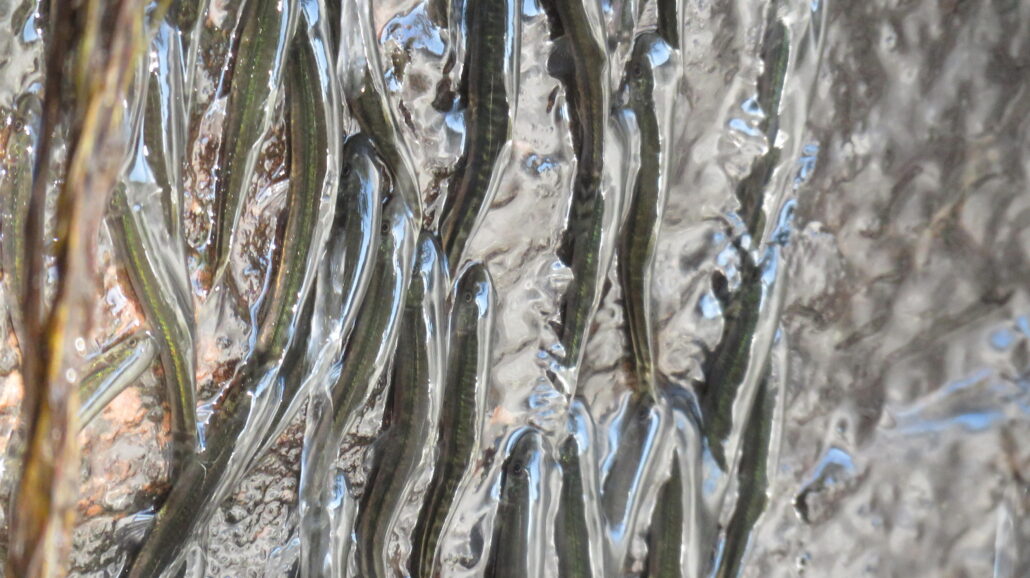
The species has long been suspected of being capable of climbing. Now, researchers report in a scientific journal that they have documented evidence of thousands of sheller fish making their way up a fast-flowing vertical waterfall some 15 meters high (almost 50 feet).
“Vertical climbing has been observed in several distantly related fish species throughout the world,” the research team reports. “However, this behavior is often poorly documented and reports in shellears have been anecdotal.”
Reporting in the journal Scientific Reports, the research team says the longest sheller observed making the climb was about 48 millimeters in length, or less than 2 inches. Yet they relentlessly made their way up the massive waterfall throughout the observation period.
The fish are migrating upstream either to return to habitats where they were washed out of by heavy rains, or to escape predators in deeper downstream waters, the scientists theorize.
Lead researchers Pacifique Kiwele Mutambala and Emmanuel Vreven said the fish they monitored took about 10 hours to reach the top. The average travel time was 9 hours 45 minutes.
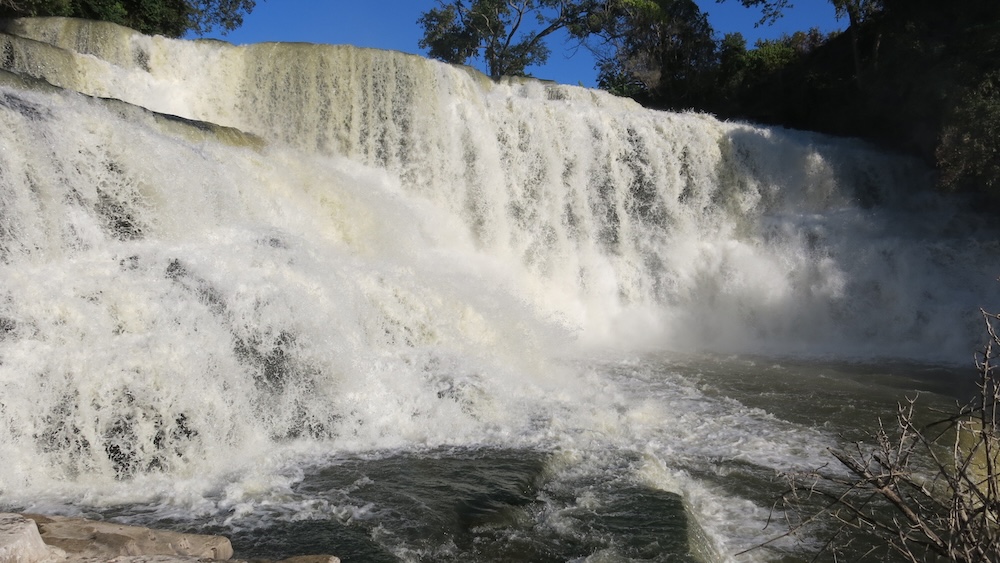
This tiny but mighty fish makes its way up wet vertical cliffs by “linging to the vertical rock surface of the waterfall and propelling themselves upwards using their pectoral and pelvic fins” that have tiny hooks on them, the paper explains.
The fish zig-zag their way up the waterfall, searching for the best purchase while trying to avoid strong jets of water that can hurtle them back to the bottom.
“This includes 15 minutes of movement, 30 minutes of short pauses, and nine one-hour-long rests,” the study says.
However, the rock-climbing fish species faces threats to its future survival.
“Unfortunately, the Luvilombo River is exposed to serious anthropogenic impacts,” the study warns. “The most important, albeit occasionally, is its complete desiccation during the dry season, resulting mostly from withdrawal of water for cropland irrigation, which undermines the ecological continuity of the river.”
Park Info
Park:
Upemba National Park and Kundelungu National Park
Location:
Democratic Republic of the Congo
More Information: