The world’s most recognized marsupial and an icon of Australia is now an endangered species. Scientists are now hoping to save the species from the brink through a new and improved standardized genetic data collection tool.
Koalas have been taken for granted for too long.
A favorite of zoo visitors, we’ve long assumed that koalas as a species are in great shape. In fact, their numbers have dwindled due to urban sprawl, habitat fragmentation, invasive species, and devastating bushfires.
Today, the koala is officially listed as endangered in New South Wales, Queensland, and the Australian Capital Territory. Conservationists fear that they may become extinct in the wild within the next 50 years if nothing is done to save them.
Now, Australian scientists are employing a pioneering way to map the genetic makeup of surviving wild koalas.The idea is to ensure strong survival traits in the population and avoid mistaken inbreeding through animal translocation programs.
The SNP panel
The Australian Genome Research Facility says the new standardized genetic screening tool they’re using to assess wild koalas’ genetic fitness involves “a single-nucleotide polymorphism (SNP) array that used next-generation sequencing technologies.”
Conservationists say the University of Queensland-led project is significantly improving and enhancing efforts to recover koala populations where they are most at risk.
“Much of the koala’s natural habitat has been heavily fragmented or degraded due to land clearing, urban development, and climate impacts like drought and bushfires,” Dr. Lyndal Hulse, a researcher at the University of Queensland’s School of the Environment, told Public Parks.
Habitat availability and connectivity are critical to species’ long-term survival.
A sufficiently connected habitat allows for population mixing and healthy gene flow, thereby improving the genetic fitness of a species’ population over time. Habitat fragmentation disrupts resource availability, but it also disrupts gene flow.
The new SNP genetic marking tool is designed to help fix this problem, Hulse said.“Genetic tools like the SNP panel help us identify where gene flow is breaking down and which populations are most at risk,” she said.
The embattled koala
Famous for its biodiversity and unique species like the kangaroo and platypus, Australia has already lost more than 100 of its native species to extinction since European settlers began colonizing the land there.
The Australian government has a list of 110 priority species facing the threat of extinction. The government has pledged to do what it takes to save them.
A new study published earlier this year estimates that putting a halt to Australia’s ongoing extinction crisis would take 30 years and cost more than AUS$15.6 billion annually.
Koalas have emerged as the latest species under threat after a series of devastating wildfires decimated their habitat and wild populations. The rapid increase in Australia’s human population and the resulting expansion of urban settlements have caused tremendous harm to the species, as well.
More recently, scientists are better appreciating the damage being done by Australia’s expanding road network.
For example, researchers recorded incidents of koalas being hit by cars along a stretch of highway between the community of Nebo in central Queensland and Mackay, a city on Queensland’s coast. In a recent survey, scientists recorded at least 145 incidents of koalas being hit by cars along this stretch of the Peak Downs Highway.
Hulse said science is now laser-focused on finding ways to maintain and recover koala populations surviving in Australia’s public lands.
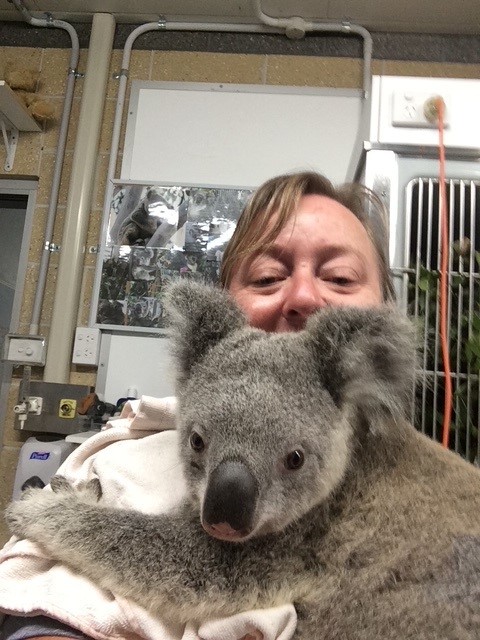
Dr. Lyndall Hulse holding a koala in a lab. Photo courtesy of the University of Queensland.
Superior genetic data
Hulse said the DNA sampling methods researchers are using are minimally invasive and don’t harm the animals.
“A common approach is taking a small tissue biopsy from the ear when ear tagging, which provides high-quality DNA,” she explained. “Blood samples may also be collected using sterile techniques performed by trained professionals. In some cases, especially for non-invasive studies, researchers may use samples such as feces, though these typically yield lower quantities of DNA.”
She said the SNP panel is faster and more accurate than conventional genotyping methods. It’s also cheaper.
“The koala SNP panel not only streamlines the genotyping process by making it faster, more cost-effective, and scalable, but it also greatly enhances the quality and resolution of the genetic information obtained,” Hulse said.
Translocation
One method of helping endangered species populations recover their numbers is by relocating healthy individuals to places where the species’ numbers are relatively low.
This method not only helps replenish the population of a species in a given area but also improves a group’s genetic diversity.
But there are also risks associated with translocating individuals of an endangered species to new areas. That’s why such programs are typically heavily regulated by wildlife authorities.
It’s the same with endangered populations of koalas in Australia.
Hulse clarified that she and her colleagues are not trying to drive the evolutionary process in any one direction.
“The aim is not to engineer or manipulate evolution, but rather to support natural processes and maintain healthy, genetically diverse populations,” Hulse said. “In managed breeding or translocation programs, this information can assist in avoiding pairing closely related individuals or introducing animals into genetically incompatible populations, which could reduce overall fitness.”
While insisting the new standardized SNP panel genetic mapping tool is a step-change in koala conservation, the U Queensland team understands that it’s no cure for habitat loss.
The long-term survival of the koala will require protecting and expanding critical habitat to allow koalas to thrive in the wild and multiply their numbers.
The protected habitat that remains also needs better connectivity. This could necessitate the creation of wildlife corridors or even vegetated bridges across highways to help animals migrate safely.
“While this technology doesn’t replace habitat, it provides critical data to guide conservation actions, such as targeted translocations, habitat restoration, or planning wildlife corridors to support genetic connectivity,” Hulse told us.
“The technology complements broader habitat-based conservation efforts by ensuring that any interventions are informed, strategic, and aimed at preserving the long-term genetic health of the species.”
Park Info
Park:
Australia’s national parks and protected areas
Location:
Australia
More information: