New research shows that small steps toward mangrove restoration can go a long way.
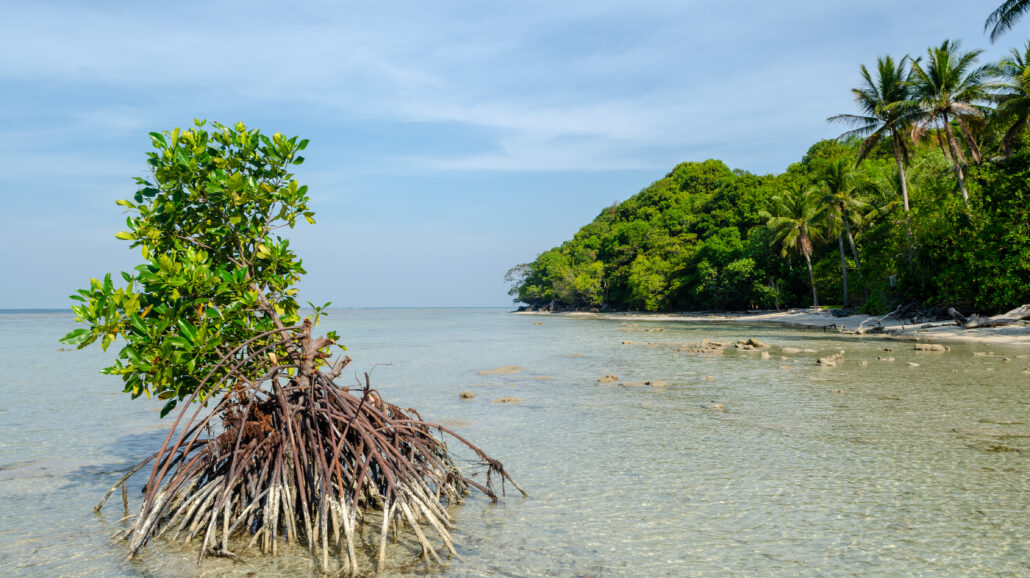
Mangrove forests are among nature’s most critical habitats. The buttresses formed by the trees’ unique root systems serve as nurseries for fish and protective habitat for other marine species. They also build land, guard against erosion, and help make inland areas more durable to major storms and harsh weather.
Millions of hectares of coastal mangrove forests have been lost to urbanization and deforestation. But new research suggests there’s hope.
A study out of the University of Queensland in Australia concludes that conserving a relatively small area of coastland for mangrove preservation and growth can see forests reviving in a broad swath of adjacent land.
“By preferentially targeting places where there is less impact of climate change, our analysis found just a 7.3 per cent increase in protected areas can make mangrove networks 13.3 per cent more resilient,” says University of Queensland Ph.D. candidate Alvise Dabala, the main author of the new study. “In practical terms, a small increase protecting where mangroves have the best chance of surviving in the future and not just where they exist today will pay dividends.”
The research was published in the journal Nature Communications.
The researchers modeled the impacts of conservation measures on mangrove habitat restoration, focusing on measures aimed at adapting to and mitigating against climate change.
The authors believe effective cooperation will require countries to coordinate their efforts across national boundaries, but conclude that the benefits are outsized compared to any efforts taken.
“Our study demonstrates that a moderate increase in the
extent of protected areas can result in a much more climate-smart
protected area network,” the paper concludes. “Our results can inform decision-makers, highlighting opportunities for establishing national and international conservation strategies to develop effective climate-smart conservation actions.”
A newer report into Australia’s State of the Environment finds environmental conditions in the country poor and getting worse. The new mangrove study sheds light on how public park mangers may better design efforts to conserve and restore northeast Australia’s endangered mangrove ecosystems.