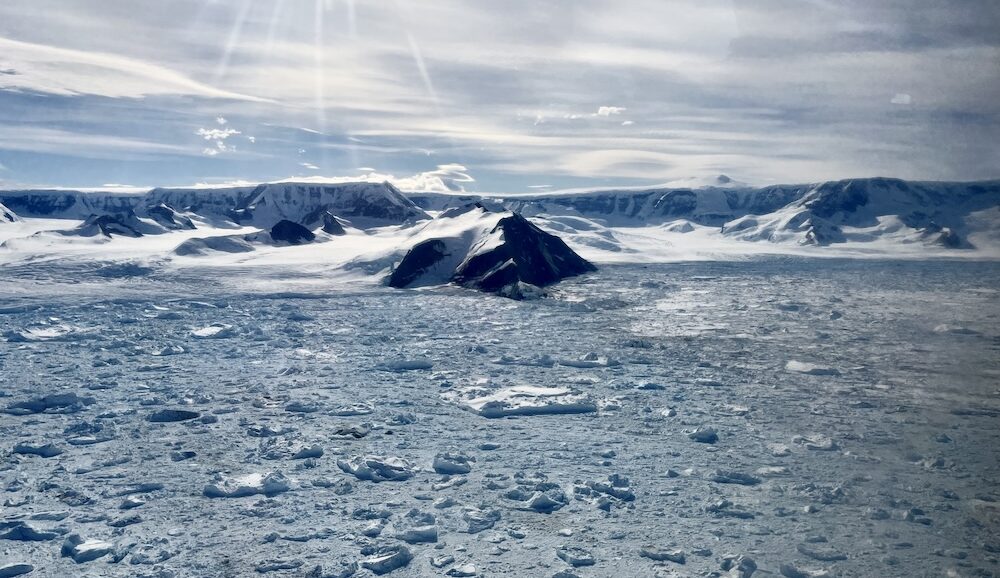
The fastest retreat of an Antarctic glacier ever recorded spells trouble for the southernmost continent’s ice shelves.
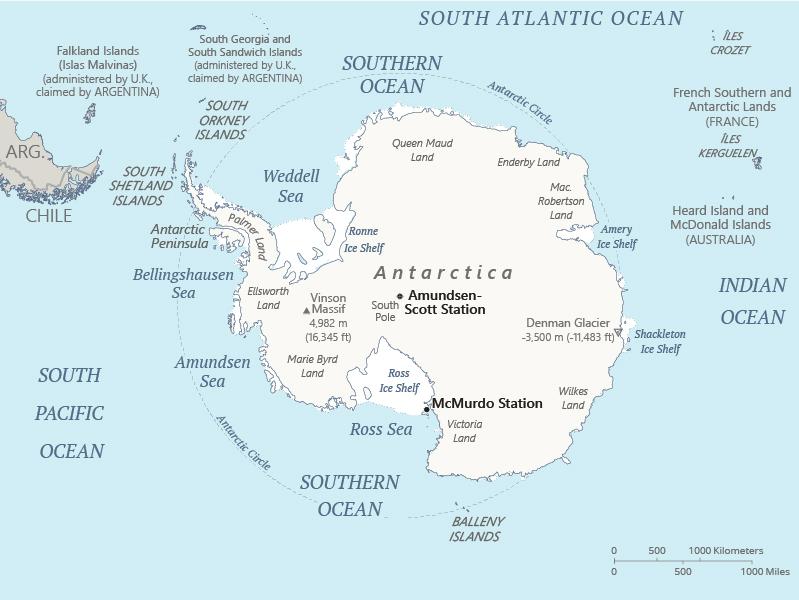
In a new paper, researchers at the University of Colorado at Boulder reveal that a glacier in the Antarctic Peninsula retreated at a rate 10-times faster than the previous speed record holder. They say a careful analysis of satellite data shows that the Hektoria Glacier lost nearly 50% of its mass in just two months, retreating by 8 kilometers or 5 miles.
Glaciers are said to “retreat” when they melt away at their edge, creating the illusion that they are retracting back toward their origin points.
The CU scientists said the loss of land-based glacial ice occurred from November to December 2022. During this peak ice loss period, they recorded the glacier retreating 0.8 kilometers per day on average.
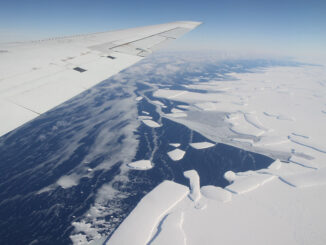
“When we flew over Hektoria in early 2024, I couldn’t believe the vastness of the area that had collapsed,” said lead author Naomi Ochwat.
They compiled evidence that the glacier lost land-based or “grounded” ice and not sea ice which regularly breaks off and melts into the sea. They said the retreat of Hektoria coincides with seismic data that was recorded during the event.
This means the glacier’s melt-off contributes to rising sea levels.
“The earthquakes confirmed the glacier was grounded on bedrock rather than floating, proving both the presence of an ice plain topography and that the ice loss contributed directly to global sea level rise,” the authors wrote.
Their findings are published now in Nature Geoscience.
“Hektoria’s retreat is a bit of a shock,” said co-author and senior research scientist Ted Scambos. “This kind of lightning-fast retreat really changes what’s possible for other, larger glaciers on the continent.”
Risk to Antarctic ice shelves
Hektoria’s virtual collapse is just the latest sign of accelerating changes seen in Antarctica as the world average temperatures increase, a direct result of the continuing accumulation of greenhouse gases in the atmosphere.
New research out of France paints an even more alarming picture.
Antarctica’s ice shelves are critical because they prevent land-based ice from sliding into the Southern Ocean. Lose them, and the continent loses its ability to store huge volumes of ice, thus keeping sea levels stable.
Working out of the University of Sorbonne, scientist Clara Burgard says modeling she’s developed shows that Antarctica is at risk of losing nearly 60% of its ice shelves by 2300.
If this happens, it means future generations will witness huge changes in sea level. Burgard estimates that a loss of this much ice from Antarctica alone would increase average sea levels by 10 meters, or nearly 33 feet.
Burgard and her colleagues’ findings are out now in the journal Nature.
The researchers said the extent to which Antarctic ice shelves are rendered “non-viable” depends on the degree to which the world can get its greenhouse gas emissions under control.
With very little control and runaway global warming, it’s likely that Antarctica will witness the disappearance of 59% of its ice shelves over the next 275 years. Ice losses are mitigated under lower emissions scenarios.
“To mitigate future sea-level rise and preserve the structural integrity of Antarctic ice shelves and ice sheets, low-emission pathways must be prioritized,” they stressed.
The impacts this loss of ice is having on Antarctica and on the world cannot be underestimated. The speed with which Antarctica is changing is incredible, as hundreds of climate scientists have already attested.
Ochwat said it’s one thing to see the changes in satellite images or in climate modeling, and an entirely different thing to witness them in person.
“I had seen the fjord and notable mountain features in the satellite images, but being there in person filled me with astonishment at what had happened,” she recalled.
Park Info
Location:
Antarctica
More Information: